


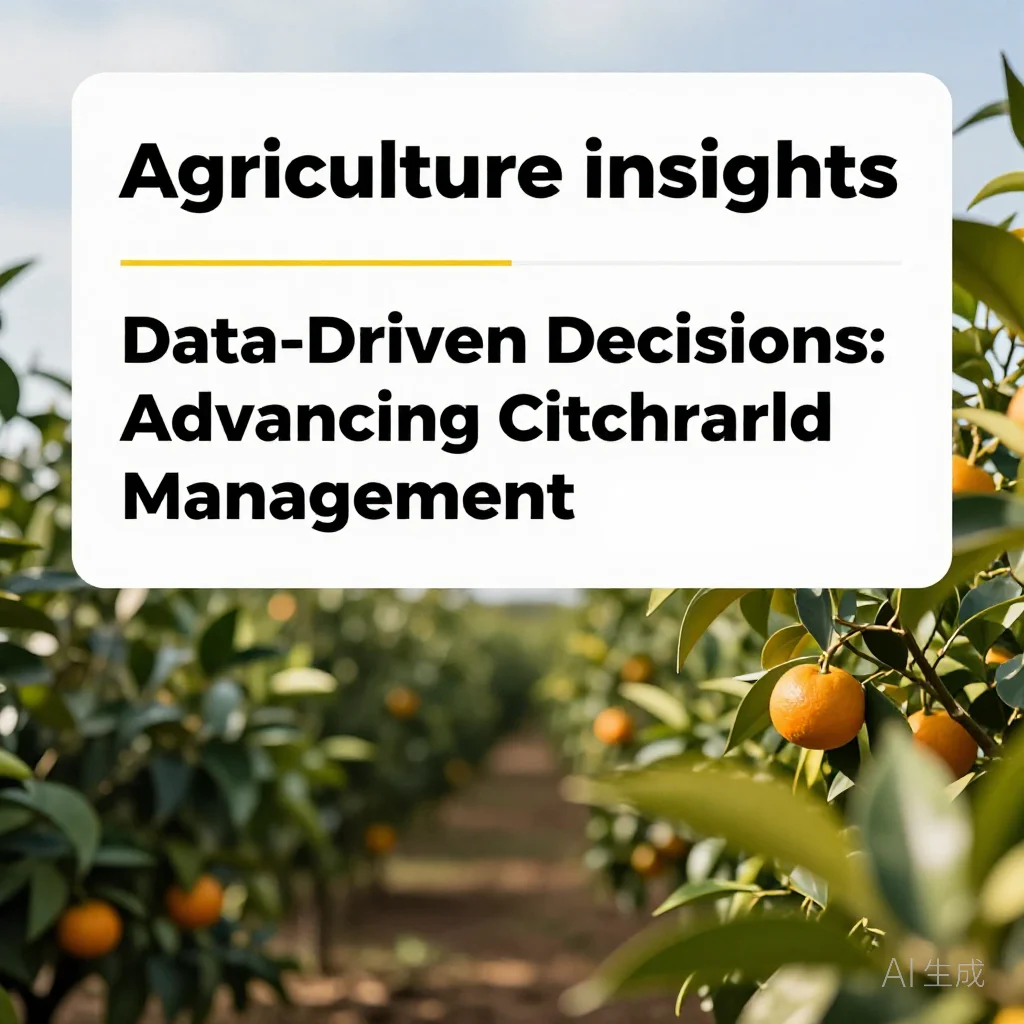
Explore how data-driven agriculture insights are revolutionizing citrus orchard management, enhancing fruit quality, sustainability, and profitability for premium producers like Ganzhou Navel Orange.
The global citrus industry stands at a pivotal crossroads. Traditional farming wisdom, passed down through generations, remains invaluable, but it is no longer sufficient to meet the complex challenges of modern agriculture—from climate volatility and resource scarcity to stringent market demands for quality and traceability. For premium producers like Ganzhou Navel Orange, the future of sustainable, profitable cultivation lies in harnessing agriculture insights. This paradigm shift towards data-driven decision-making is transforming how we manage our orchards, optimize resources, and consistently deliver the superior fruit that the world expects.
Historically, orchard management relied heavily on observable patterns and experiential knowledge. While this foundation is irreplaceable, it is inherently reactive and generalized. Today, agriculture insights refer to the actionable intelligence derived from systematically collecting and analyzing data from across the orchard ecosystem. This intelligence moves operations from a blanket approach to a precise, predictive, and proactive model.
The data ecosystem in a modern citrus orchard is rich and multi-layered. It includes geospatial data from satellites and drones, micro-climatic data from in-field weather stations, soil sensor data on moisture and nutrient levels, and even spectral data that can indicate plant health and stress before it’s visible to the human eye. When integrated and analyzed, this data provides a holistic, real-time view of the orchard’s status, revealing correlations and causations that were previously impossible to detect.
Effective data-driven management focuses on several critical agricultural variables. Understanding and acting upon these data streams is central to advancing orchard performance.
Soil and Root Zone Analytics: Continuous monitoring of soil moisture, temperature, and electrical conductivity (EC) allows for precision irrigation and fertilization. Insights here prevent both water stress and wasteful overwatering, directly impacting fruit size, juiciness, and rind quality—key attributes for Ganzhou Navel Oranges.
Canopy Health and Vigor Monitoring: Using NDVI (Normalized Difference Vegetation Index) and other vegetation indices derived from drone or satellite imagery, managers can assess canopy density, chlorophyll content, and spot early signs of nutrient deficiency or pest infestation. This enables targeted interventions in specific orchard zones rather than area-wide applications.
Precision Yield Mapping and Forecasting: Advanced algorithms can analyze historical yield data, current-season blossom set, and fruitlet data to generate accurate yield forecasts. This is crucial for supply chain planning and meeting forward contracts with global importers, ensuring reliable volume and timing.
Micro-Climate Data Integration: Hyper-local weather data helps predict and mitigate risks from frost, excessive heat, or untimely rain, which can all affect fruit development and harvest schedules. This layer of insight is vital for protecting the delicate balance required for premium navel orange production.
Adopting a data-centric approach requires a structured framework. It begins with sensor and IoT (Internet of Things) deployment to collect raw data. This data is then fed into a centralized farm management software platform where it is cleaned, integrated, and visualized. The true power, however, is unlocked in the analytics phase, where descriptive (what happened), diagnostic (why it happened), and ultimately predictive (what will happen) models are built.
For instance, by correlating soil moisture data with historical irrigation schedules and fruit brix (sugar content) readings at harvest, growers can refine their irrigation protocols to maximize sweetness. Similarly, analyzing pest pressure data against treatment applications and weather patterns can lead to more effective, and reduced, integrated pest management (IPM) strategies. This systematic approach is detailed further in our exploration of Precision Agriculture: Data-Driven Strategies for Modern Citrus Orchards.
The ROI of investing in agriculture insights is measured in tangible outcomes. First and foremost is the enhancement of fruit quality and consistency. Data-driven practices ensure optimal growing conditions throughout the season, leading to more uniform fruit size, higher sugar-acid ratios, and stronger peel integrity—attributes that define the Ganzhou Navel Orange brand in competitive international markets.
Secondly, resource efficiency skyrockets. Precision application of water, fertilizers, and crop protection agents reduces input costs and minimizes environmental impact, aligning with global sustainability goals. This responsible stewardship is not just good for the land; it’s a powerful narrative for consumers and business partners who value ethical and sustainable sourcing. The connection between data-driven cultivation and market success is explored in our resource on Premium Ganzhou Navel Oranges: Sourcing Strategies for Global Importers.
Finally, risk is mitigated. Predictive insights allow growers to anticipate problems and act preemptively, securing the harvest and stabilizing farmer income. This forward-looking capability is the ultimate competitive advantage in an industry at the mercy of nature and markets.
The evolution of agriculture insights is moving towards artificial intelligence (AI) and machine learning. These technologies can process vast, complex datasets to provide prescriptive recommendations—not just what will happen, but what specific action to take for the best outcome. Imagine an AI system that recommends the exact date to harvest a specific orchard block based on a predictive model of sugar accumulation, weather forecasts, and market price trends.
This continuous learning loop, where outcomes feed back into the system to refine future predictions, represents the next frontier. It promises a future of autonomous orchard management that is increasingly efficient, resilient, and capable of producing unparalleled quality. The foundational step towards this future is building a robust data infrastructure today, a topic we delve into in our article on Leveraging Data Analytics for Superior Citrus Orchard Management.
The most effective first step is to start with a single, manageable data point that addresses a key pain point. This is often soil moisture monitoring. Installing a few strategic soil sensors allows for data-informed irrigation decisions, which typically shows immediate water savings and quality improvements. This builds confidence and demonstrates ROI, creating a foundation for gradually adding more sensors and data layers like drone imagery or weather stations.
Data-driven management improves quality by optimizing the three pillars of fruit development: water, nutrients, and light exposure. Precision irrigation ensures optimal water stress at key stages to concentrate sugars. Targeted nutrient applications based on soil and leaf tissue analysis prevent deficiencies that affect peel texture and juice content. Canopy management informed by vigor maps ensures even sunlight penetration, promoting uniform color and ripening. The result is a more consistent, sweeter, and visually perfect fruit.